Milk supplied by our member dairy farmers is a key raw material for many of our products. We also source a range of other raw materials, including specific ingredients and packaging materials. Responsible sourcing is important to us, and we apply clear policies and requirements to the materials we source.
Our responsible sourcing approach
Responsible sourcing is integrated into our sustainability strategy. We recognise our responsibility to address environmental and social risks associated with the raw materials we source. Our key raw materials include cocoa, soybean oil, palm oil, cane sugar, soy, and packaging paper. We aim to source 100 percent of these from sustainably managed sources. We report annually on our progress in our Annual Report. At present, 100 percent of our key raw materials are sourced from sustainably managed sources.
Traceable to source
Greater transparency and traceability help us understand where our key raw materials come from and monitor environmental and social risks in their supply chains. We work with suppliers and partners to improve traceability through sourcing requirements, certification, supply-chain data and monitoring.
Our focus areas
In terms of responsible sourcing, we have identified specific areas to focus on.
Greenhouse gas reduction
Our science-based greenhouse gas emissions reduction targets are divided into FLAG and non-FLAG emissions. By 2030, we have committed to reducing FLAG emissions by 30.3 percent and non-FLAG emissions by 42.13 percent compared with the 2020 base year.Human rights
Respect for human rights is a key priority in FrieslandCampina's global operations. We implement due diligence measures aimed at identifying, preventing and mitigating human rights risks, in line with our human rights policies and standards.Deforestation
We strive to prevent our sourcing of raw materials from contributing to deforestation, the conversion of natural ecosystems, or human rights violations. Our commitment to responsible sourcing is reflected in our supplier requirements and sourcing policies.
We collaborate with suppliers to identify potential risks and implement measures to prevent or mitigate adverse impacts in our supply chains. We work with suppliers who are expected to comply with our policies, standards and responsible sourcing requirements. Together, we strive to uphold ethical standards and mitigate risks within our supply chain.
Responsible sourcing in practice
We aim to source our raw materials from suppliers that meet our responsible sourcing requirements and applicable certification standards. We report on sourcing practices, certification and traceability for selected key raw materials.
In many cases, we adhere to the guidelines of the following institutes:

Palm oil: certification, traceability and farmer livelihoods

We use palm oil for coffee creamer, fat powders, toppings and sweetened condensed milk. No less than 90 percent of the world's palm oil production comes from Indonesia and Malaysia, and an estimated 40 percent is produced by smallholders. Our policy focuses on responsible production, traceability, farmer livelihoods and biodiversity-related considerations. We only purchase RSPO-certified palm oil. A list of our suppliers and a list of mills that supply us further upstream in the palm oil supply chain can be found here. For MCT (a derivative of palm oil), FrieslandCampina buys mass balance from Oleon and here is the full mill list of Oleon. We are working on further traceability and monitoring ESG issues in our palm oil mill locations.
According to the 2024 edition of the WWF Palm Oil Buyers Scorecard, we have achieved the second-highest ranking in the Netherlands and 26th place globally out of 285 companies. Based on the progress and performance on key actions we are taking to source and support sustainable palm oil, we scored 19.26 out of 24 points.
Pulp and paper: responsible and recycled
For many of our products, we use packaging cardboard to provide consumers with optimal convenience. 91 percent of the paper we use for this is certified. Approximately one-third of our packaging cardboard can be traced to the factory or forest it came from.
For reasons of transparency, we regularly report on our progress and are open about our packaging carton suppliers. Please find here more details about the traceability for cartons and here for liquid packaging.
Cocoa: supporting a more resilient cocoa sector
FrieslandCampina participates in the Dutch Initiative on Sustainable Cocoa, a public-private partnership focused on improving the living conditions of current and future cocoa farmers and their families.
Responsible sourcing of soy
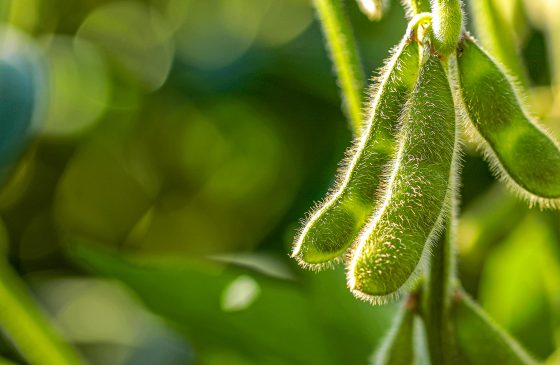
FrieslandCampina does not purchase animal feed directly, but member dairy farmers do. Dairy cows in the Netherlands are mainly fed grass, hay, silage, and maize. Many dairy farmers supplement this with compound feed. This largely consists of by-products from the food industry. Only 1 to 2 percent of the total ration is made up of soy, which is rich in high-quality proteins.
Without appropriate safeguards, soy can contribute to deforestation and the conversion of natural ecosystems. Since 2015, soy used in feed for dairy cattle on Dutch member dairy farms has been covered by certificates or equivalent certification from the Round Table on Responsible Soy (RTRS). This forms part of a Dutch dairy sector agreement and is implemented through requirements for feed suppliers. Deforestation- and Conversion-Free (DCF) criteria have since been added. This represents a further step in addressing risks associated with soy sourcing, but it is not the end point.
Moving towards greater traceability
Certification is an important part of our approach to responsible soy sourcing, but the current system has limitations. The RTRS certificates currently used are largely based on the book-and-claim method. This means that certified soy production is supported for a volume equivalent to the soy used in dairy cattle feed, but it does not guarantee that the physical soy in feed supplied to Dutch member dairy farms is itself certified.
FrieslandCampina therefore works with the Dutch dairy and feed sectors to improve traceability and strengthen the chain-of-custody approach. In 2025, FrieslandCampina and the Dutch Dairy Association asked the feed industry to take further steps to reduce deforestation and conversion risks associated with soy used in Dutch animal feed. The sector is working towards the use of more specific supply-chain data and a transition from book and claim to controlled blending. These developments are intended to provide greater insight into the origin and land-use impact of the soy used in animal feed.
