The future of our member dairy farmers and FrieslandCampina is closely tied to the natural environment. But nature is under pressure. Climate change, biodiversity loss and the degradation of soil and water quality pose serious threats to global food security.
Dairy farmers play a vital role in food production while managing agricultural land and natural resources. At FrieslandCampina, we work with our member dairy farmers on activities related to biodiversity, soil, water and agricultural landscapes.
Nature: the driving force behind every dairy farm
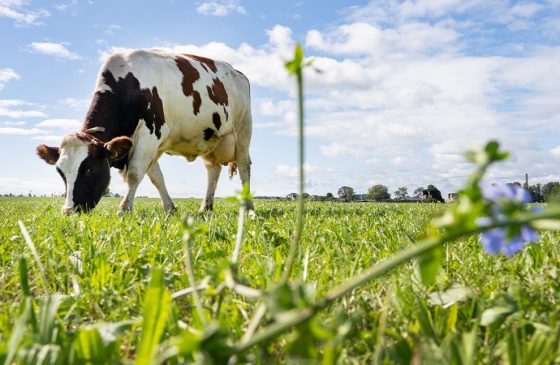
Dairy farmers live with and rely on nature. Cows convert grass into valuable nutrients for human consumption, while farmers care for the land with dedication. Together, our member dairy farmers manage a significant share of the agricultural land in the Netherlands. This comes with great responsibility, but also with great opportunity.
We work together on initiatives related to soil health, water quality, biodiversity and agricultural landscapes. Many of our farmers take active steps to support this, such as planting flower-rich field margins, hedgerows and woodland edges, or creating wet areas that can provide habitat for meadow birds.
Our approach to nature
Our nature-related approach focuses on topics such as biodiversity, land use, soil, water and agricultural landscapes. Together with member dairy farmers and partners, we work on initiatives that support biodiversity and strengthen the long-term resilience of dairy farming. Through data collection, incentives, partnerships and on-farm measures, we continue to expand our understanding of nature-related impacts and opportunities.
Biodiversity monitor
Together with WWF Netherlands and Rabobank, we developed the Biodiversity Monitor for dairy. It is a system that tracks farm-level performance using biodiversity-related indicators over time. Since 2018, we have collected data from all our member farms in the Netherlands, which allows us to measure, monitor and better understand biodiversity-related performance.

Regenerative agriculture
At FrieslandCampina, we work on regenerative agriculture with a focus on biodiversity, soil, water, climate and animal welfare. We see regenerative agriculture as an approach that can support nature-related objectives while strengthening the long-term resilience of dairy farming.
What our farmers do
Based on extensive farm data and practical experience, we have identified five practices that make a contribution to climate, biodiversity, and animal health and welfare and result in a higher premium for members based on their performance on biodiversity, climate and animal health and welfare indicators. We call these the Foqus 5 measures. Through workshops, educational videos, and digital advisory tools, we support our member farmers in applying these practices on their farms. The Foqus 5 measures are:
- Optimising protein in animal feed
This can help reduce nitrogen losses and associated ammonia emissions. Depending on the feed composition, it may also contribute to lower greenhouse gas emissions. - Increasing fresh grass intake
Increasing fresh grass intake can help reduce ammonia emissions under appropriate farm conditions. - Herb-rich grasslands and grass-clover mixtures
These can support soil health and may reduce reliance on synthetic fertilisers. - Extending the longevity of cows
Responsibly extending cow longevity can improve farm efficiency and contribute to lower greenhouse gas and ammonia emissions per kilogram of milk. - Better-quality homegrown roughage
This can support animal health and reduce reliance on externally sourced feed.
How we support our farmers
Learn about our initiatives related to biodiversity and agricultural landscapes

Rewarding results
Through our Foqus planet programme, member dairy farmers are rewarded for their efforts in biodiversity, climate, and animal health and welfare. The better their performance, the higher the premium.Knowledge and data
We collect data from all our member farms and use it to understand what works best. With these insights we support farmers with tailored advice, tools, workshops and study groups to improve performance on biodiversity, climate, and animal health and welfare topics.Partnerships and innovations
We work with NGOs, governments, customers, and others to scale practical approaches and find innovative solutions. Through these partnerships, we help translate on-farm efforts into market value and reward farmers for their results.
Responsible sourcing
In addition to milk supplied by our member dairy farmers, we source a range of other raw materials, including specific ingredients and packaging materials. We apply responsible sourcing policies and requirements to these materials.

