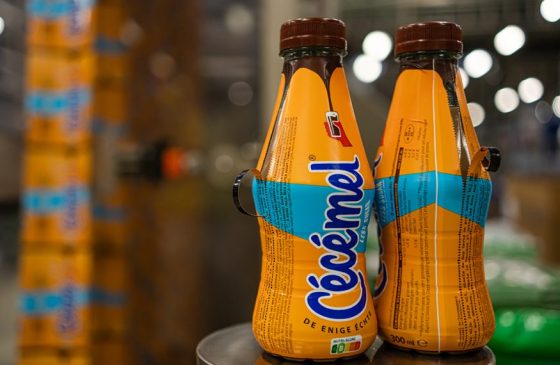
Good packaging keeps our dairy products safe and fresh. It can help extend shelf life and reduce food waste. At FrieslandCampina, we work to improve packaging circularity by increasing recyclability, reducing packaging-related emissions and making informed choices about packaging materials. In doing so, we balance environmental considerations with product quality, food safety and consumer convenience.
Working towards circular packaging
Packaging circularity is one of the priorities within our sustainability strategy. We work to improve the recyclability of our packaging while also considering factors such as energy use, product protection and food safety. Balancing these requirements can be complex and often involves trade-offs between recyclability, material use, greenhouse gas emissions and product protection.
We use a range of packaging materials, including plastic, carton, metal and glass. Each material has different characteristics and considerations. When selecting packaging materials, we take into account environmental impact, shelf life, product protection and consumer convenience.
We seek opportunities to increase the use of recycled, renewable and responsibly sourced materials where feasible. We also work with partners across the value chain to improve the collection, sorting and recycling of packaging materials. We work to improve packaging circularity, supporting our long-term ambition for a circular and net zero packaging portfolio by 2050.
Packaging solutions for different regions
Effective recycling depends on collaboration across the value chain, including manufacturers, customers, retailers, governments, sorting facilities and recyclers. Recycling systems and regulations differ across countries and regions. As a result, packaging solutions that work well in one market may not be suitable in another. We therefore work with local partners to improve packaging circularity and develop packaging solutions that support recycling while maintaining product quality and food safety.
Data-driven packaging decisions

We use many different packaging formats across our global markets. The most suitable packaging solution depends on the product, market conditions and available recycling infrastructure. Packaging decisions often involve trade-offs between environmental considerations, including recyclability, material use and greenhouse gas emissions. For example, a highly recyclable packaging format may require more material, while a lighter packaging option may have different recycling characteristics.
To support decision-making, we use data to assess multiple environmental and product-performance criteria. This helps us evaluate packaging options based on environmental considerations, product protection, shelf life and food waste reduction, enabling more informed decisions.
