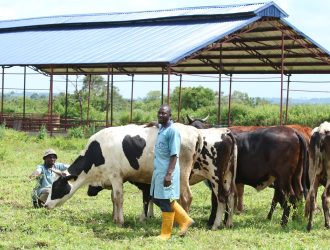
At the present time, Nigeria’s food supply is largely dependent on imports. The Nigerian government wants this to change. The country aims to become far more self-sufficient in the near future. At the same time, the Nigerian population is expected to double to approximately 450 million people by 2050. As a result the local dairy sector faces major challenges.
150 years of dairy experience
“Producing milk in a country like Nigeria is not easy,” says Yvonne van der Vorst, Dairy Development Director at FrieslandCampina. “The climate does not lend itself very well to dairy farming and the level of knowledge and access to the right resources are limited. On the basis of 150 years of dairy-related experience we help local farmers increase their milk production, improve the milk’s quality and give them access to the market. An effective Dairy Development Programme has emerged over the last ten years. As a result, this year we purchased six million kilograms of raw milk from thousands of local farmers and we valorised this milk into our products for the Nigerian market. Furthermore, thanks to the Dairy Development Programme these volumes are expected to grow drastically over the coming years.”
Dairy development knowledge centre
The dairy development knowledge centre created by FrieslandCampina in October plays an important role in this respect. This Centre for Nigerian Dutch Dairy Development (CNDDD) brings together the expertise of various parties with the objective of realising the sustainable growth of the Nigerian dairy sector. In addition to knowledge exchange, FrieslandCampina also invests in a network of milk collection points. For example, in the last ten years 28 local milk collection points were constructed and FrieslandCampina also invested in water wells, improved breeds and in training livestock farmers.
Truly proud of our efforts
Nigeria is an important growth market for FrieslandCampina and the Dairy Development Programme plays a crucial role in our ability to continue operating in that market. “It is our license to operate,” Yvonne continues. We really are a major example in the field of Dairy Development and are now helping approximately 10,000 farmers to increase their standard of living. This is something of which we can be truly proud! FrieslandCampina is optimally equipped for valorising local milk into its products and for winning in the Nigerian market. And the farmers jointly profit from this: in Nigeria, as well as our own member dairy farmers.