The Center for expertise will encourage cooperation between the private sector and academic institutions to support rapid and sustainable growth of the Nigerian dairy industry. As a research and training institute with expertise in the field of dairy development, the Center will focus on various aspects of dairy production, such as food and milk quality, the productivity of individual cows and general farm management. The goal is to improve these aspects using Dutch dairy expertise.
According to Ben Langat, Managing Director of FrieslandCampina WAMCO, 'With FrieslandCampina's expertise on dairy and our "from grass to glass" approach, we are committed to promoting the growth and development of the local dairy sector. In the past, close cooperation between the public and private sectors has proven to be an important success factor. We are pleased to share our 150 years of experience in the dairy sector with our Nigerian partners via the Center for Nigerian Dutch Dairy Development.'
Background
The Nigerian dairy sector is facing major challenges right now. One such challenge is the country's population, which is expected to increase from 200 million to 400 million by 2050. A strong agricultural sector offers a sound basis for a stable society. That is why the Nigerian government wants to provide the dairy sector with a much-needed boost. By increasing self-sufficiency, producing in a more market-oriented way and improving quality throughout the chain, the national economy will be supported.
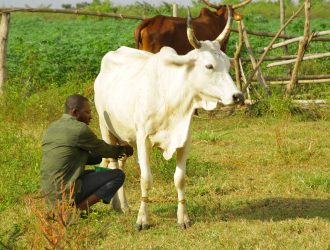
Through the Dairy Development Programme (DDP), FrieslandCampina WAMCO is closely involved in efforts to improve the local milk supply by investing in education and training for local farmers and a network of milk collection points. More than nine thousand dairy farmers across five states in Nigeria are involved. The local milk supply has gradually increased over the last decade. FrieslandCampina WAMCO intends to realise a broader and more in-depth inclusive growth of local milk production. It does so by cooperating with local farmers and offering them the necessary expertise and support to improve their knowledge, milk yields and milk quality.