95 percent recyclable by 2025
Packaging must meet many requirements. The most important one is that packaging protects the product and ensures its shelf life. By 2025, 95 percent of all packaging from FrieslandCampina must be recyclable. This aligns with our sustainability objectives. The more we recycle, the more sustainable we become and the smaller our CO2 emissions. This also applies to our cheese packaging.
Different types of plastic
When I started at this company in 2011, cheese packaging consisted of different materials: the top film was made of a type of plastic, the label was made of paper, and the bottom film was composed of two other types of plastic. These different types of plastic made recycling virtually impossible because each material has different properties and therefore needs to be processed differently.
Bottom film suitable for recycling
In 2013, as the first in the market, we reduced the different types of plastic in the bottom film (cheese tray) to one type, polyethylene (PET). The bottom film was now suitable for recycling.
However, there was still no suitable recycling infrastructure available for PET. Therefore, in 2019, we switched from polyethylene to polypropylene, a plastic that is already recycled on a large scale in existing sorting and recycling centers. It was an interim step because the recycled product of polypropylene is legally not allowed to be reused as packaging material for food, which is ultimately our goal.

Meanwhile, we have collaborated with the recycling industry to establish new design guidelines for recyclable PET packaging, making them easily recyclable. Together with our supplier, we have adjusted the packaging. The new packaging also complies with the stricter guidelines for PET packaging that apply from January 1, 2023.
Floating top film
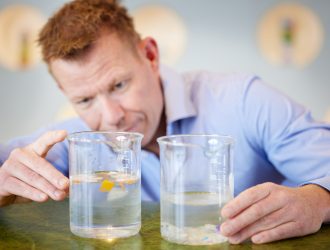
In 2022, we developed a top film and a label for the cheese packaging with a specific gravity of less than 1 gram per cubic centimeter, allowing them to float on water. The plastic of the cheese tray has a specific gravity of 1.33 and sinks in water. This separates the different materials from each other. From the sunken PET material, we can create new film. This accounts for approximately 75 percent of the total packaging.
Continued efforts towards full recyclability
I expect that in the future, with new techniques, we can also largely reuse the top layer. Full recycling is our goal. That is what we will keep working on. Making our cheese packaging more sustainable is an ongoing process. It is gratifying to see that your ideas work out well and that you can progress because it also makes technical sense.
Collaborating on sustainability
As FrieslandCampina, we do not want to compete on sustainability. That is why we have not protected this innovation. If another packaging producer wants to use this method, they can. This way, more companies can package their products in a more sustainable manner. Our advantage is that we are the first in the market to offer this packaging product. We see an increasing demand for sustainable packaging. We are part of a consortium with organizations like Afvalfonds, Plastic Pact NL, and sorting and recycling companies. In this consortium, we advise other companies to also start using these new types of packaging.