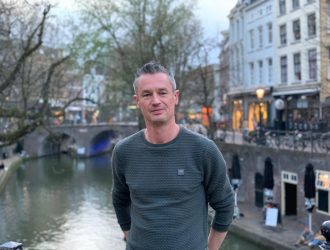
Evert Driezen, Category Procurement Manager, has been involved in the procurement of raw materials for FrieslandCampina for more than 15 years. Since 2017 he is responsible for all raw materials for flavourings like, for example, fruits and natural vanilla. And together with our strategic partners, Givaudan and Symrise, he aims for 100% responsible and sustainable sourcing. How? Read in his story below.
Job with a purpose
“I grew up on a dairy farm. And I am so happy to see that this same farm is now being taken over by my brother and his wife as my parents will soon enjoy a well-deserved retirement. I am very passionate about my job and everything we do at FrieslandCampina on the topic of sustainability. My work not only earns me an income but enables me to contribute to the livelihood of our member dairy farmers as well farmers around the world whom we reach through our extended supply chain.”
Raising awareness on sustainable sourcing
“Consumers and customers care about sustainability and want to know where all ingredients in a product come from. Some of our products have natural vanilla added to the taste profile and that is why since several years we engage in partnerships to source natural vanilla 100% sustainably. We do that not only to satisfy market demand but because we care about farmers. Through our partnerships for sustainable natural vanilla sourcing we have direct positive impact on the communities that grow this precious orchid. I think it is important for consumers to be aware about this, so that they can make conscious choices what products to buy.”
Vanilla production in Madagascar
“Madagascar accounts for +/- 80% of the world’s vanilla production. At the same time the island and its population face many challenges among which the seasonality and volatility of vanilla price, weak social and physical infrastructure, and deforestation. Increasing the vanilla price might sound like a possible solution to help solve some of those challenges but that has already proven not to be the case. Think for example about the Madagascar's vanilla wars which got a lot of media coverage a few years back.”
Our sustainability projects
“Together with both Givaudan and Symrise we have sustainability projects in place. In this story I want to highlight the work done with our natural vanilla partner, Symrise, as we run a long-term programme to improve the livelihoods of farmer families in Madagascar. The joint programme goes far beyond just ensuring reasonable prices. It is three-pronged and focuses on 1) finding the sweet spot at making farmers more resilient, 2) driving positive impact for the wider community and 3) protecting nature. Some tangible examples from the programme include that all of our partnering farmers benefit of an annual health insurance as a security net for them and their families. Besides, to date over 300 farmers have been trained on smart agriculture practices and over 200 farmers have followed trainings on financial management and soil conservation.”
“Madagascar is prone to natural disasters such as cyclones and drought which always highly impact farmers. That is why several farmers have also been trained to support all members of their community on crop diversification with ginger. Trough co-cropping farmers benefit from diversified income and are less likely to lose everything in case a hazard affects the country.”
A positive impact on farmers, societies and on our planet
“There still isn’t an industry standard on sustainable vanilla sourcing and there certainly are things to be improved in the industry. Nevertheless, the work with our strategic partners shows that things can be changed for the better. It is also a fantastic example of how SDG 17 of the United Nations, partnerships for sustainable development, is put in practice. By telling this story I hope other companies get inspired to take action too. At FrieslandCampina we will continue doing our share to have a positive impact on farmers, societies and on our planet.”