Reduce greenhouse gas emissions
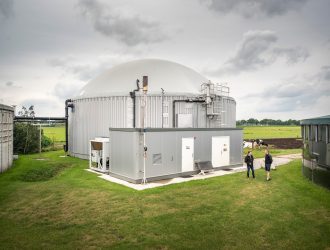
With the Jumpstart project, FrieslandCampina is helping member dairy farmers with the step towards mono-manure fermentation: extracting biogas from manure. FrieslandCampina wants to lead with sustainability and it does this, among other things, by generating energy and reducing greenhouse gas emissions on the farm. These two parts come together in "mono-manure fermentation". This process is not easy. Because it must be closely aligned with business operations in order to yield the best and longest possible results: both ecologically and economically. That is why Jumpstart strives to have increasingly better solutions and an extensive package of qualification requirements with suppliers before they can participate as a provider.
Cooperative sustainability
Simone Boitelle, Global Director Corporate Affairs: “FrieslandCampina believes in cooperative sustainability. This means that we focus on long-term cooperation with relevant parties so that we can make a demonstrable sustainable impact together. We want to support our nearly 17,500 members to achieve their goal of increasingly sustainable farming. Jumpstart - and the sustainability projects we lead from there - is a textbook example of such collaboration and I am proud of that. We still have to take a lot of steps, but this step also counts in order to achieve concrete results at and around the farm.”
FrieslandCampina believes in cooperative sustainability.
Simone Boitelle, Global Director Corporate Affairs
Less emissions, more income
Member dairy farmer Jelle Heida has a mono-manure fermentation installation: “It took a while, but I am happy that my installation also passed the tests after the necessary technical improvements. We even scored above expectations on the conversion. The device continues to run well, I have little work to do, but it does have much lower CO2 emissions and a lot of extra income.”
Interest increased significantly
The qualification of Biogas Plus comes at a favorable time. Interest in mono-manure fermentation among dairy farmers is increasing, as confidence in the technology and the revenue model is growing. But also because of the discussion about nitrogen and ammonia emissions, since a Jumpstart installation can almost halve the ammonia emissions. It is expected that approximately 30 Jumpstart installations will be running or under construction at the end of this year. The greater choice for members and the performance guarantees due to strict supplier requirements pave the way for a greater increase in new Jumpstart installations.