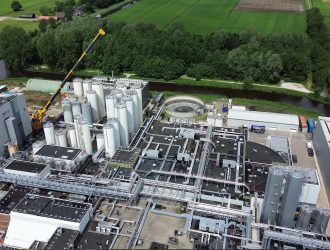
FrieslandCampina Gerkesklooster is reducing its ecological footprint through innovative water-saving solutions. By reusing water extracted from whey, the site saves over 100 million litres of water annually. As a result, it is now 70 percent self-sufficient in its water usage—an increase of 20 percent.
Reverse osmosis: extracting water from whey
Cheese production generates whey as a by-product, which mainly consists of water and serves as a raw material for, among other things, infant and sports nutrition. While this water was previously lost, it is now recovered in Gerkesklooster using a smart technique: reverse osmosis. This process pushes the liquid through specialised membranes that allow only pure water to pass. The result is clean water that is reused, for instance, in production processes and for cleaning equipment and milk tankers.
A saving of 100 million litres annually
Thanks to this technology, the Gerkesklooster production site now saves more than 100 million litres of water each year. Consequently, the site is 70 percent self-sufficient in its water needs, with the aim of becoming fully self-sufficient in the future.
Project manager Jasper Faber is proud of the achievement: “Cheese is not only delicious but also nutritious. However, producing it requires a great deal of water and energy. Our focus on sustainability drives us to use these resources as efficiently as possible and to minimise our environmental impact. On top of that, we’re cutting costs and improving our competitive position. It’s a win-win situation. The implementation was technically challenging, but thanks to the efforts of more than a hundred colleagues, we achieved this without halting production. That’s a true team effort.”
Following this success, the technology is being rolled out to other sites, including the production site in Lutjewinkel.