Better nature
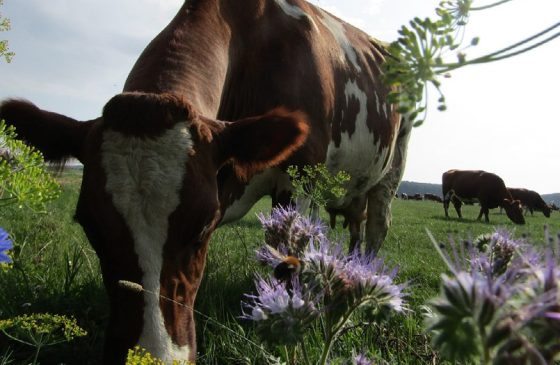
More biodiversity means healthier nature, and therefore higher quality milk and dairy. Our goal is to have as much biodiversity as possible on our members’ farms. We encourage this in all sorts of ways: through meetings, rules, partnerships and more. But we also want to make an impact further from home, for example with programmes in which we train and support farmers in other countries.
Biodiversity Monitor for dairy farms
In the Netherlands, over 75% of all dairy farmers are members of FrieslandCampina. That means we can achieve a lot together. Member dairy farmers have tremendous influence on the biodiversity on their farm and in surrounding nature reserves. They even have an influence on areas further away, for example through the purchase of feed. To measure this influence, we created the Biodiversity Monitor, together with the World Wide Fund for Nature's Netherlands office (WNF) and Rabobank. The Biodiversity Monitor provides member dairy farmers with information about the biodiversity and the related improvements that can be made on their farm.
The Biodiversity Monitor uses Key Performance Indicators (KPIs) to measure a dairy farm's influence on diversity. The KPIs are greenhouse gas emission, soil nitrogen balance, ammonia emission, share of protein produced by own land, share of permanent grassland and share of nature and landscape management. The monitor is aligned with the guidelines of the Food and Agriculture Organization of the United Nations (FAO-LEAP).
Member dairy farmers can check the Biodiversity Monitor to see their scores. The Monitor also provides insight into opportunities for improvement on their own farms. This comprehensive approach to biodiversity is unique in the world.
Working together for meadow bird management
Together with BoerenNatuur and the Netherlands Society for the Protection of Birds (VBN), we established the Strengthening Meadow Bird Management Foundation (Stichting Versterking Weidevogelbeheer). Funding from this foundation makes it possible to implement land managers’ and farmers’ specific plans for meadow bird management.

Foqus planet
We run a quality and sustainability programme called Foqus planet to ensure quality throughout the entire chain. This programme also includes requirements for biodiversity on the farms operated by our member dairy farmers. To support them on their way to increasingly sustainable business operations, we reward their efforts to improve biodiversity with the Foqus planet bonus. The amount of that bonus depends on the extent to which they have achieved the KPIs in the Biodiversity Monitor.
Dairy Development: Sharing knowledge about biodiversity
We offer training courses to dairy farms in Asia, Africa and Eastern Europe via Dairy Development activities. Experts chosen by us share their knowledge about biodiversity. In this way, we ensure that farmers all over the world know how to maintain healthy ecosystems in and around their farms.
Impact via purchasing
With our biodiversity policy, we not only look at the influence on the environment of the farm but also internationally. This applies, for example, to ingredients that our members purchase for the feed of their cows. The average daily diet of the cows of our member dairy farmers comes almost entirely from own land or very close-by, but for a small part from further away.
Cows' feed consists mostly of roughage (92%), such as grass and corn. A small part of the diet includes concentrate (8%). The concentrate contain different products such as wheat, beets and residues from the food industry, but also soy (around 1%). FrieslandCampina members have been purchasing soy 100% sustainably since 2015, according to RTRS certification (Round Table for Responsible Soy certificates). The World Wildlife Fund (WWF) has concluded that FrieslandCampina is a leader in the responsible purchasing of soy.
Pilot physically separated deforestation-free soy for livestock
For soybean purchasing for animal feed, the RTRS certification and control is important because of several sustainability factors, such as a good price for local farmers. Because FrieslandCampina believes it is important that member dairy farmers can rely on the fact that their sustainably purchased soy has been produced without deforestation with 100% certainty, we are taking the next step. In 2021 we started a pilot with agricultural cooperative and feed supplier Agrifirm to get a guaranteed deforestation-free soy 'stream' going. This means that approximately one third of our members will be able to switch to this sustainable soy by 2022.
Also fight deforestation where we are not active - partnering with IUCN
FrieslandCampina believes it is important that the risk of deforestation is reduced everywhere, including in areas where soy is not sourced for the feed of Dutch dairy cows. In addition to the existing RTRS soy and in addition to starting up a physically separated supply stream in collaboration with Agrifirm, FrieslandCampina is also working with the Dutch Sustainable Dairychain and IUCN to ensure that no soy is produced in the areas for dairy feed, that proper certification can take place and that risks are eliminated. This project also works to promote additional nature conservation and restoration in those areas. This concerns the areas around Chaco (Argentina).
We are committed to ensure its sourcing, production and financial investment does not cause or contribute towards gross conversion of natural ecosystems by 2030 the latest. The Accountability Framework is our guideline for our policy, commitment and approach.

Want to know more about sustainability on the farm?
Our member dairy farmers work hard for as sustainable as possible business operations.
Last modified on: 18/01/2023 12:44