100% responsible
Better nature is one of the priorities of our sustainability programme Nourishing a better planet. The products we purchase include cocoa, soybean oil, palm oil, cane sugar, soy and paper for packaging. We strive to source 100% of these materials from sustainably managed sources. We report on this to our member dairy farmers, customers and consumers every year. At present, 100% of the raw materials we purchase come from sustainably managed sources.
Goal for 2025
Responsible purchasing is important to us, but that is not our only goal. We prefer to have an overview of the entire chain of raw materials that we purchase. Our aim is for 95% of key raw materials to be traceable back to source by 2025. The materials in scope are palm oil, soy, pulp and paper, and cocoa purchased by the company.
100% Sustainably sourced key agricultural raw materials in 2022
purchased agricultural raw materials from sustainably managed sources94% Key raw materials traceable to source in 2022
traceability of palm oil, soy, pulp & paper, cocoa purchased by the company#3 Scoring company
in the Netherlands WWF Palm Oil Buyers Scorecard 2021

Palm oil: good incomes, better living conditions
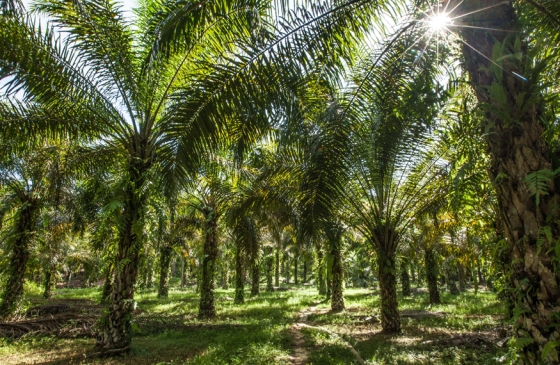
We use palm oil for coffee creamer, fat powders, toppings and sweetened condensed milk. No less than 90% of the world's palm oil production comes from Indonesia and Malaysia, and 40% comes from farmers operating or producing on a small scale. This presents challenges with regard to living conditions, biodiversity and the environment. For that reason, our policy focuses on sustainable production, traceability, good incomes for farmers and the preservation of biodiversity. We only purchase RSPO-certified palm oil. A list of our suppliers can be found here and a list of the mills that supply us further upstream in the palm oil supply chain here.
Responsible use of palm oil
We are one of the top 3 companies in the Netherlands on the WWF Palm Oil Buyers Scorecard. Together with World Wide Fund for Nature (WWF) we have also published a case study in relation to key achievements, challenges, and future plans when it comes to sourcing sustainable palm oil.

We help palm oil farmers take the next step
In some cases, we want to buy responsibly, but this is simply not yet an option. When this happens, we contribute to projects that help make this possible. Together with Olenex and Wilmar, we have set up a two-year programme for small-scale palm oil farmers and growers in Colombia. This programme, WISSCo2, offers farmers guidance for sustainable production, based on the principles of “No deforestation and no exploitation”. Four hundred and thirty-seven farmers from the northern part of Colombia have so far participated in this programme.
Pulp and paper: responsible and recycled
For many of our products, we use packaging cardboard to provide consumers with optimal convenience. 91% of the paper we use for this is certified. These certificates (such as PEFC) serve to assure consumers that the cardboard has been produced responsibly and does not contribute to deforestation. Approximately one-third of our packaging cardboard can be traced to the factory or forest it came from. For reasons of transparency, we regularly report on our progress and are open about our packaging carton suppliers. Please find here more details about the the traceability for cartons and here for liquid packaging.
Ingredients of animal origin
We hardly use any animal products other than milk. We only use eggs in two of our brands: Valess and Mona. All the eggs we use for this are 100% from free-range chickens. The hens are given at least 4 m2 of space per animal and have unlimited a vegetation-covered outdoor-area during the day. The hens are not kept in cages and no beaks are trimmed unless there is a medical necessity. Likewise, we get all of our fish oil exclusively from sustainably managed sources.

Contributing to the United Nations Sustainable Development Goals
We consider it important to focus on those aspects on which we have a real impact.
Last modified on: 21/02/2023 00:23